If you've noticed a sudden drop in organic traffic and can't pinpoint the cause, Google's AI Overviews might be the culprit. These AI-generated answers appear at the top of search results, often reducing the need for users to click through to websites. The impact is real: many sites are seeing significant declines in click-through rates. But this isn't the end of SEO-it's a shift. By understanding how AI Overviews work and adjusting your content strategy, you can not only recover lost traffic but also position your site to be referenced in those AI answers. In this article, we'll break down why traffic is dropping and provide actionable steps to adapt.
Problem Background
AutoSEO Analysis: Strategic implementation results.
Google's AI Overviews, launched to provide quick answers directly in search results, have fundamentally altered user behavior. Instead of clicking on organic links, users often find their answer within the AI snippet. Early data suggests click-through rates can drop by 20-60% for queries where an AI Overview appears. For businesses relying on organic search traffic, this is a serious concern. The issue isn't just visibility-it's about being replaced by a summary that may not even cite your content. Traditional SEO tactics like keyword stuffing and basic on-page optimization are no longer sufficient. The algorithm now prioritizes authoritative, well-structured content that can be extracted for these AI responses.
Core Concept
The core concept to understand is that AI Overviews are not replacing SEO; they are raising the bar. Google's AI models, like MUM and Gemini, evaluate content based on E-E-A-T (Experience, Expertise, Authoritativeness, Trustworthiness) and how well it answers user intent. To be featured in AI Overviews-or to rank well despite them-your content must be structured for semantic understanding. This means using clear headings, concise answers, schema markup (like FAQ and How-to), and creating pillar content that establishes topical authority. In short, the goal is to become the source that the AI trusts to cite.
Practical Approach
Here's how to adapt: 1) Audit your traffic to identify which pages are most affected. Look for queries where an AI Overview now appears. 2) Restructure content to be more scannable and direct. Use bullet points, numbered lists, and succinct definitions. 3) Implement structured data: FAQ schema, How-to schema, and Article schema can help Google understand and pull your content. 4) Build topical authority by creating comprehensive pillar pages and cluster content around your core topics. 5) Focus on E-E-A-T signals: include author bios, cite credible sources, and get backlinks from reputable sites. 6) Optimize for featured snippets-since AI Overviews often borrow from featured snippet content. Use tools like AutoSEO.cloud's AI SEO Content Engine to automate these processes at scale.
Common Mistakes
Many SEOs make the mistake of trying to game AI Overviews with short, simplistic answers. Instead, Google's AI prefers comprehensive, well-sourced content. Another mistake is neglecting technical SEO: slow load times, poor mobile experience, and lack of schema can all prevent your content from being considered. Also, failing to update old content-AI Overviews favor fresh, relevant information. Finally, ignoring the importance of internal linking; a strong internal link structure helps Google understand the context and authority of your pages.
How AutoSEO.cloud Helps
AutoSEO.cloud offers an integrated AI SEO platform that addresses these challenges head-on. Our AI SEO Content Generator helps you create structured, authoritative content at scale, complete with optimized headings, schema markup, and internal linking recommendations. The SEO Content Automation Platform allows you to build topical authority systems-pillar pages and content clusters-that signal expertise to Google's AI. With the Bulk SEO Content Generator, you can produce dozens of articles optimized for E-E-A-T and structured for AI Overviews. Plus, our automated system ensures your content stays fresh and technically sound. It's a complete solution for reversing the AI Overview traffic drop.
FAQ
What is AI Overview?
AI Overview is a Google feature that generates a concise answer to a search query using AI, displayed at the top of results before organic links.
Why is my SEO traffic dropping?
AI Overviews often satisfy user intent without a click, reducing traffic. Shift focus to structuring content for AI citation and building authority.
Is SEO still worth it in 2026?
Absolutely. SEO is evolving, not dying. Focus on quality, authority, and structured content to compete.
How to get featured in AI answers?
Create comprehensive, well-structured content with clear answers, schema markup, and strong E-E-A-T signals. Target featured snippets as a stepping stone.
What is topical authority?
It's the depth and breadth of content on a specific topic, signaling to search engines that you're a trusted source. Build it with pillar-cluster models.
CTA
Don't let AI Overviews drain your traffic. Start reversing the decline with AutoSEO.cloud's Authority System. Our AI-powered tools help you build content that gets cited, not ignored. Get started today.
Internal Link Suggestions
- Link to [Why Google AI Overviews Reduce Clicks and How to Adapt Your SEO Strategy]
- Link to [How to Build Topical Authority in the Age of AI Overviews]
- Link to [Internal Linking for AI Overview Optimization: A Strategic Guide]
- Link to [Structured Content: How to Format Your Articles to Win AI Overviews]
- Link to [What Is Google AI Overview? A Complete Guide for SEOs and Business Owners]
Image Prompts
- Hero image: A 3D SaaS-style illustration with a sleek glassmorphism dashboard showing a declining line graph in royal blue with an AI Overview icon hovering above, causing a shadow on the graph. Below, a glowing cyan arrow points upward to a recovered traffic spike. Clean white background, soft blue-purple gradients, minimal elements.
- Concept explanation image: A 3D glassmorphism illustration of a search results page with a prominent AI Overview box in cyan and purple, covering organic search results. An arrow from the AI box points downward to a shrinking website icon. On the right, a magnifying glass highlights structured data markup. Light background with subtle royal blue accents.
- Product workflow image: A 3D glassmorphism step-by-step workflow: Step 1: a document icon with E-E-A-T badges in blue-purple. Step 2: an arrow leading to a structured content editor with schema markup. Step 3: a dashboard showing recovered organic traffic graph with upward trend in cyan. Clean white background, glass-like panels, royal blue and cyan color scheme.
Disclaimer
This article is for informational purposes only and does not constitute professional SEO advice. Results may vary based on industry and competition.
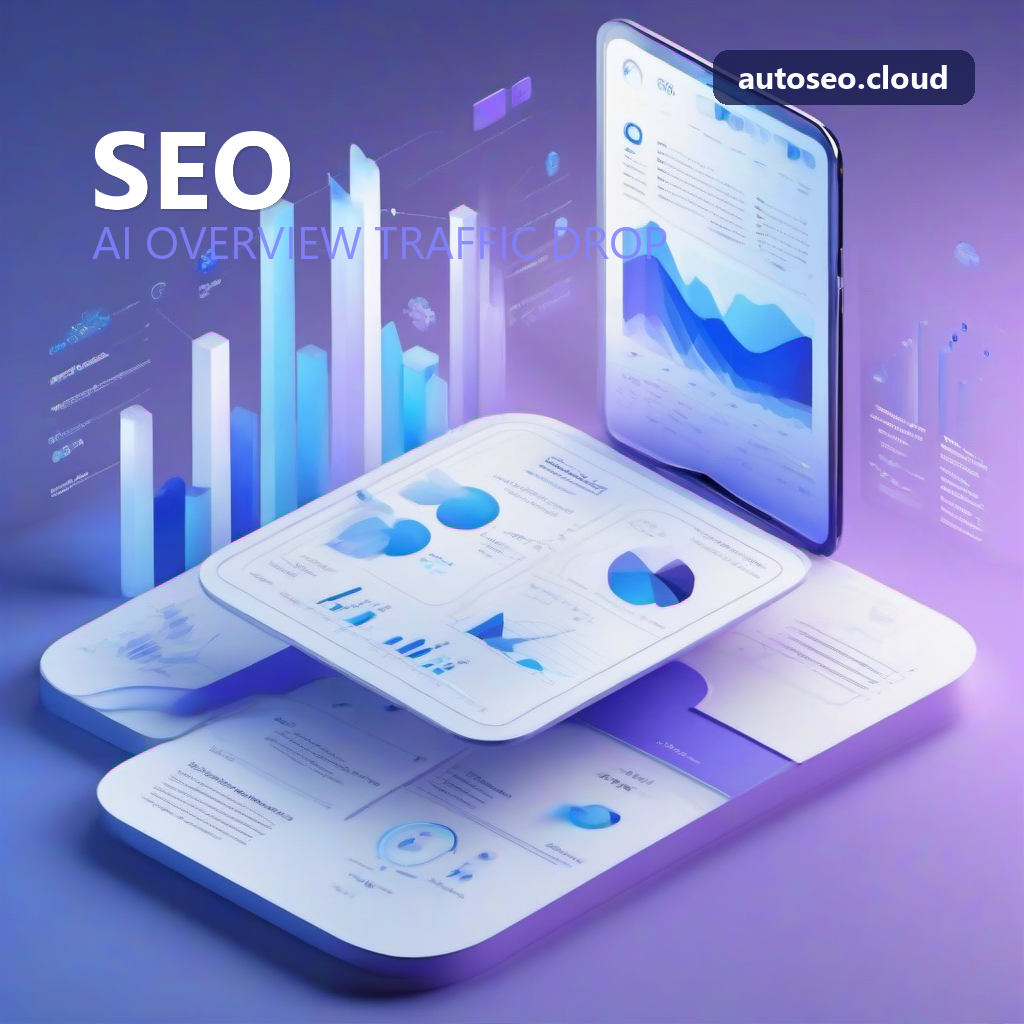
AutoSEO Impact: Verified traffic growth.