In an era where AI can generate thousands of articles in minutes, trust has become the rarest currency in search. Google's E-E-A-T framework now places heavy weight on individual author authority - who wrote the content and why they are qualified. If your site relies on anonymous bylines or generic "staff writer" credits, you are missing a critical trust signal that can decide whether your content lands in AI Overviews or gets buried. This article breaks down why SEO author credibility matters more than ever and how you can build it systematically.
Problem Background
AutoSEO Analysis: Strategic implementation results.
For years, search engines evaluated content based on keywords and links alone. But as AI-generated content floods the web, Google has doubled down on expertise and trust. Algorithms like Helpful Content Update and ranking signals tied to E-E-A-T now scrutinize the person behind the text. AI Overviews and featured snippets often pull information from sources with clear author credibility - detailed bios, external credentials, and consistent bylines. Without these, even high-quality articles can fail to earn visibility. Many businesses post content under vague names, missing a chance to signal authority and missing out on placements.
Core Concept
SEO author credibility is the measure of a content creator's perceived expertise, authority, and trustworthiness as evaluated by Google. It goes beyond the content itself to include the author's bio, credentials, published works, and external recognition. This ties directly into the E-E-A-T framework: Experience (first-hand knowledge), Expertise (formal or deep knowledge), Authoritativeness (recognition by peers), and Trustworthiness (accuracy and honesty). Google uses these signals to decide whether content deserves high rankings, especially for YMYL (Your Money or Your Life) topics. Byline authority is a concrete, implementable part of this - making it essential for anyone serious about organic growth.
Practical Approach
Building author credibility requires a systematic approach. Start by creating detailed author profiles with a professional headshot, a summary of credentials, links to published works (e.g., LinkedIn, Google Scholar, industry publications), and a brief statement of expertise. Implement byline author schema markup (Author type ) so Google can parse this information. Ensure each author publishes consistently under the same name across your site and on external platforms. Contribute guest posts to reputable sites in your niche to build external authority. Update bios periodically as credentials grow. For topics requiring deep expertise, consider adding co-authors with relevant backgrounds. Finally, link author pages to topical clusters so Google sees a clear connection between an expert and a body of knowledge.
Common Mistakes
The most common mistake is using a generic byline like "Staff Writer" or "Admin" - this offers zero trust signal. Inconsistent author names across articles confuse search engines and dilute credibility. Another error is omitting author bios entirely or writing vague ones without credentials. Failing to use schema markup means Google may not recognize the author at all. Some sites also publish under multiple pseudonyms, which can appear spammy. Lastly, neglecting to build external proofs - such as LinkedIn endorsements or citation profiles - leaves E-E-A-T gaps. Avoid these pitfalls to ensure your authority signals are strong.
How AutoSEO.cloud Helps
AutoSEO.cloud's Authority System is purpose-built to solve the author credibility challenge. It automates the creation of optimized author profiles with schema markup, ensures consistent bylines across all content, and generates credential pages that align with your topical authority strategy. The AI SEO Content Engine can draft expert bios and suggest external linking opportunities to boost trust signals. By integrating with your content workflow, the platform helps you build a library of expert authors and systematically increase your SEO author credibility for better AI Overview placement. No manual guesswork needed.
FAQ
What is author credibility in SEO?
Author credibility is the trust signal Google uses to evaluate whether a piece of content is written by a knowledgeable and trustworthy source. It includes the author's bio, credentials, external recognition, and consistency of byline.
How does Google evaluate author authority?
Google looks at author schema, byline consistency, bio detail, links to external profiles, and the author's presence on authoritative sites. It also considers the overall topical authority of the author across your site.
Does byline matter for all niches?
Yes, but it matters most for YMYL topics (health, finance, legal). For other niches, it still strengthens E-E-A-T and can differentiate your content from AI-generated competitors.
How do I add author schema to my site?
Add the Author type in JSON-LD or microdata. Include properties like name, url, sameAs (links to LinkedIn, Google Scholar, etc.), and description. AutoSEO.cloud automates this for you.
Can AI-generated content have author credibility?
Yes, if the content is reviewed and published under a real author's name with a credible bio. The author's oversight and expertise add the trust signal, even if AI assisted in drafting.
CTA
Build your author authority systematically with AutoSEO.cloud's Authority System. Start your free trial today.
Internal Link Suggestions
- Link to [Topical Authority vs. Keyword Targeting: What Matters for AI Search?]
- Link to [SEO vs AEO vs GEO: How AI Is Redefining Search Optimization]
- Link to [How to Build Topical Authority in the Age of AI Overviews]
- Link to [Content Clusters and Pillar Pages: The Blueprint for AI-Ready SEO]
- Link to [What Is a Pillar Page? The Foundation of AI-Driven SEO Content]
Image Prompts
- Hero image: A 3D glassmorphism author profile card floating on a clean off-white background, featuring a stylized author photo, name, and a glowing royal blue badge with 'Verified Author'. Below, a subtle cyan link to 'Published Works' and a floating purple credential icon. Soft shadows and light reflections. Royal blue, blue-purple, cyan palette. No clutter.
- Concept explanation image: A 3D glassmorphism diagram on a white background, centered around a glowing blue-purple 'E-E-A-T' badge. Connected floating icons: a book for Experience, a magnifying glass for Expertise, a shield for Authority, and a heart for Trustworthiness. Cyan arrows show evaluation flow. Clean, minimal, with soft glass reflections.
- Product workflow image: A 3D SaaS style workflow illustration on an off-white background. Left: a glassmorphic author profile card with a cyan 'AutoSEO.cloud' icon. Middle: a glowing royal blue arrow leading to a floating AI Overview container with a 'Generate Credibility Report' button. Right: a polished result card with a green checkmark and 'AI Overview Placement' text. Purple and cyan accents. Clean background.
Disclaimer
This article is for educational purposes only and does not constitute professional SEO advice. Always consult with a qualified expert for your specific situation.
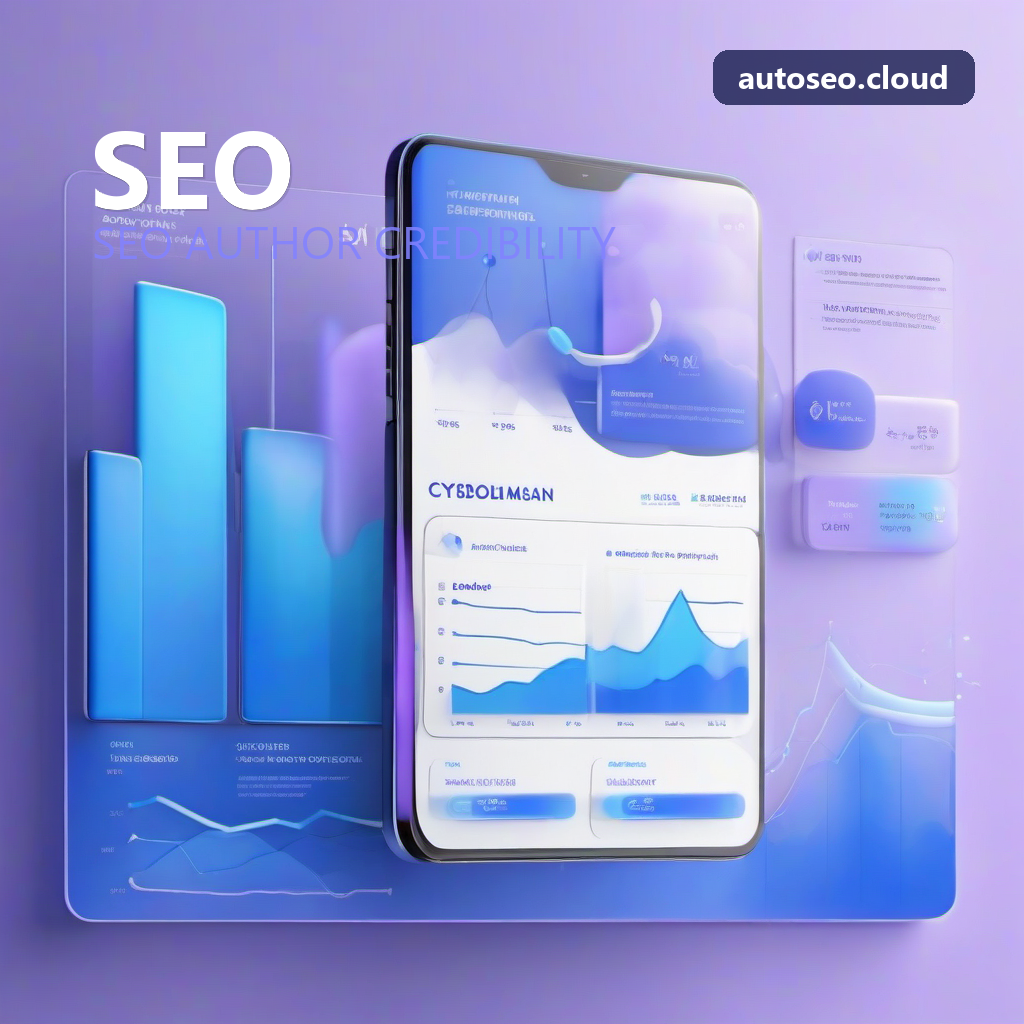
AutoSEO Impact: Verified traffic growth.